Lake Bohinj: Slovenia’s Largest Natural Lake, Explained
by Peter · Published Sep 1, 2026 · Updated Sep 2, 2026 · 8 min read
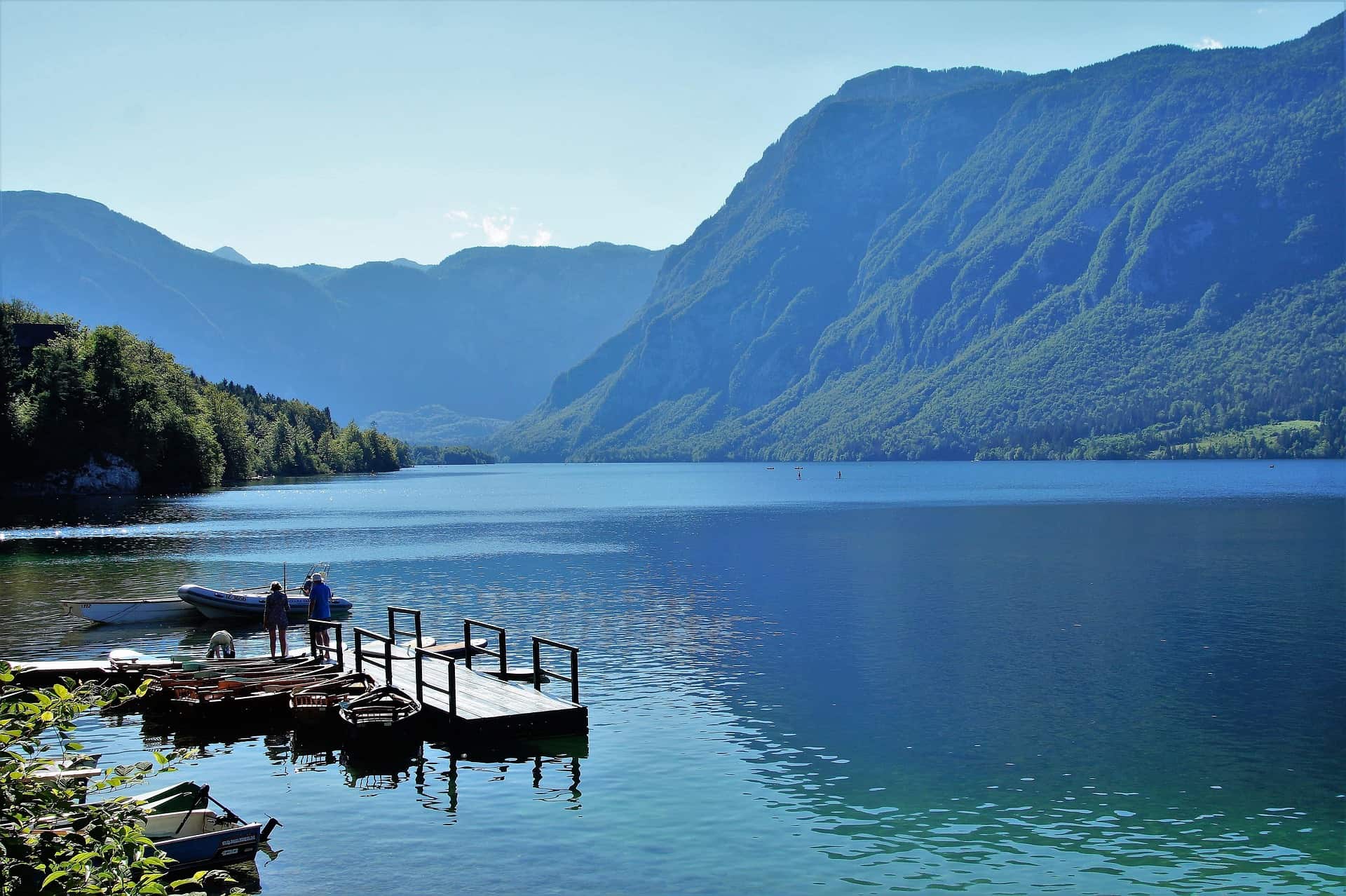
Lake Bohinj is Slovenia’s largest permanent natural lake, set inside Triglav National Park in the Julian Alps — 4.2 km long, up to 45 m deep, sitting at 526 m above sea level, more than twice the surface area of Lake Bled. It has no island and no castle, and that is largely the point: fewer crowds, colder and clearer water, and direct access to some of Slovenia’s best hiking, straight from the shore.
Bohinj sits at the far end of its own valley in the Julian Alps, inside Triglav National Park, about 83 km — roughly 1 hour 15 minutes by car — from Ljubljana, and is one of the guides in our section on Slovenian Lakes. Unlike Bled, which sits right on the main road to the mountains, Bohinj is genuinely out of the way, and that detour is what keeps it quieter.
The comparison to Lake Bled is unavoidable, because most visitors are deciding between the two, or trying to work out whether they have time for both. The short version: Bled has the postcard (island, castle, cake); Bohinj has the scale — it is longer, deeper, sits higher in the mountains, and gets noticeably fewer visitors for it.
The Lake Bohinj is ringed by a handful of small villages rather than one town. Ribcev Laz, at the eastern end, is the main hub — parking, the boat rental kiosk, and the Church of St John the Baptist with its stone bridge. Stara Fuzina, just north of the lake, is the starting point for the Voje Valley and Mostnica Gorge. Ukanc, at the western end, sits closest to the Vogel cable car and the trailhead for Savica Waterfall.
Lake Bohinj at a Glance
Lake Bohinj or Lake Bled?
Both lakes sit in the Julian Alps less than 30 km apart, but they are not really interchangeable — they suit different trips. Here is how they actually compare, feature by feature.
| Feature | Lake Bohinj | Lake Bled |
|---|---|---|
| Size | 4.2 km long, 318 ha | 2.1 km long, 145 ha |
| Max depth | 45 m | 29.5 m |
| Landmark | Church of St John the Baptist & stone bridge | Island church & hilltop castle |
| Crowds | Noticeably quieter, especially outside July–August | Busy most of the year, peak season is packed |
| Main activities | Swimming, hiking, cable car, waterfall | Pletna boat, castle, lake path, cake |
| From Ljubljana | 83 km, ~1h15 | 55 km, ~45 min |
Neither is the “better” lake — they reward different amounts of time. If you have one day and want the classic postcard with the least effort, go to Bled. If you have a second day, or you’d rather hike than queue for a pletna boat, come to Bohinj: it is close enough to Bled (about 30 minutes by car) that seeing both is a completely reasonable plan, and most visitors who do both end up preferring Bohinj.
Things to Do at Lake Bohinj
Most of it happens within walking distance of Ribcev Laz.
A full day here usually splits into two halves: something on the water in the morning while it’s still flat and the light is good, then something uphill in the afternoon. The two ends of the lake work as separate bases — Ribcev Laz for swimming, the church and the shoreline path, Ukanc for the cable car and the Savica trail — and the loop road connects them without a car.
Swimming
Free access along most of the shoreline. The eastern end at Ribcev Laz shelves gently and is the warmest; Ukanc at the far end is colder and quieter.
Free · best July–August
Boat & SUP rental
Kayaks, canoes and paddleboards rent by the hour at Ribcev Laz. Motorboats are banned on the lake, so the water stays flat all day.
From €11/hour kayak, €16/hour SUP
Savica waterfall hike
A 20–25 minute climb up around 550 steps from the car park at the western end, ending at a 78 m waterfall in a rock amphitheatre. Steep but short.
€4 entry · ~1 hr return
Vogel cable car
Runs from Ukanc up to 1,535 m in about four minutes. The view back down the whole lake, with Triglav behind it, is the single best photograph on the trip.
€28 return · 8am–7pm
Cycling the lake loop
A road and path circle the lake, roughly 12 km, mostly flat and doable in about an hour. Bike rental is available in Ribcev Laz and Stara Fuzina.
From €10/hour rental
Fishing
Lake trout, char, chub and brown trout, with daily catch limits set by species. A permit is required, sold through the local fishing society rather than on the shore.
Permit required · roughly Mar–Nov
Planning Your Visit
Costs here are modest and split across a handful of separate attractions rather than one lake-wide ticket — the lake and church are free, and you pay only for what you actually do.
| Lake & church | Free to visit |
| Savica Waterfall entry | 4 euros (16+), free under 16 and first Sunday of the month |
| Vogel cable car | 28 euros adult return, 22 euros one-way (discounts 14–25 & 60+) |
| Parking | Paid at Ribcev Laz and near Savica; free at Vogel’s valley station |
| Best season | June–September for swimming, May & October for hiking without crowds |
| Accessibility | Lakeshore is mostly flat; Savica trail and mountain hikes are not step-free |
When to Visit — and When Not To
Bohinj changes character completely between August and October.
The lake’s altitude and depth mean it warms slowly and cools slowly. It’s still cold through late spring, only reaches proper swimming temperature by mid-summer, and holds up reasonably well into the first week of September — which makes late August and early September the best-value window if swimming matters to you. Snow can linger on the Vogel plateau into May, and the higher trails above the lake aren’t reliably clear until June.
Summer
July – August- Water reaches up to 24°C, genuinely swimmable
- All rentals, boats and the cable car running full schedule
- Long daylight — you can hike Savica after a full day at the lake
- Car parks at Ribcev Laz fill by mid-morning on warm weekends
- Book accommodation well ahead
Spring & autumn
May · June · September · October- Trails and shoreline path largely to yourself
- Best hiking conditions — cooler air, clear views to Triglav
- Parking available all day, and cheaper accommodation
- Noticeably colder water — a quick dip, not an afternoon
- Some rentals and huts close outside the main season
If you can only travel in August, come on a weekday and arrive before 9am. Arriving early rather than mid-morning at Ribcev Laz is the difference between parking on the first try and circling for forty minutes.
Three Things Most Visitors Miss
The frescoes inside the church
Most people photograph the Church of St John the Baptist from the bridge and never go inside. The interior holds around 70 painted figures and scenes dating from the 13th century onward, including three separate paintings of St Christopher layered over each other from roughly 1300, 1400 and 1530.
Mostnica Gorge and the Voje Valley
A short walk from Stara Fuzina leads into a narrow gorge of crystal-clear water carved into strange rock shapes, continuing into the quiet Voje Valley to a 21 m waterfall. Easy to moderate, family-friendly, and far less visited than the lake itself.
Orlove glave, above the cable car
Most visitors ride the Vogel cable car up and stop at the top station. A short chairlift continues further up to Orlove glave, where the view opens out over the whole lake and valley — noticeably higher, and noticeably quieter, than the main viewing terrace.
There’s no direct train to the lake
The nearest train station, Bohinjska Bistrica, is still several kilometres from the shore. For most visitors, a car is the easiest way to reach Bohinj and get between its villages, the waterfall trailhead and the cable car.
See how to get thereHow to Get to Lake Bohinj
There’s no need to overthink this: driving is the easiest option for most visitors, and public transport is a realistic backup if you don’t have a car.
| By car | 83 km / ~1h15 from Ljubljana via Bled and the Soteska gorge road; 30 km / ~30 min from Bled. |
| By bus | Regular services run Ljubljana – Bled – Bohinjska Bistrica – Ribcev Laz; slower than driving but a genuine option. |
| By train | The scenic Bohinj Railway connects Jesenice and Nova Gorica to Bohinjska Bistrica station — several kilometres from the lake itself, so you’ll still need a bus or taxi for the last leg. There is no direct train from Ljubljana. |
| Getting around | Ribcev Laz, Stara Fuzina and Ukanc are spread along the lake; a local summer bus links them, but most visitors find a car or bike easiest for reaching Savica and Vogel. |
Frequently Asked Questions
Is Lake Bohinj better than Lake Bled?
They’re different trips, not a strict better-or-worse. Bled has the island, castle and easier day-trip logistics; Bohinj is larger, quieter and better suited to swimming and hiking. Many visitors do both, since they’re only about 30 minutes apart.
How do I get to Lake Bohinj without a car?
Take a bus or the scenic train from Ljubljana or Jesenice to Bohinjska Bistrica, then a local bus or taxi the last few kilometres to the lake. It’s slower than driving, but entirely doable.
Is there an entrance fee for Lake Bohinj itself?
No, the lake and its shoreline are free to access. Fees apply only to specific attractions — the Savica Waterfall trail (4 euros) and the Vogel cable car (from 22 euros).
What is the best time to swim in Lake Bohinj?
July and August, when the surface warms to around 24 degrees C. It’s noticeably colder outside those months, even though the lake is swimmable from late spring through early autumn for the hardier.
Is Lake Bohinj good for kids?
Yes — the lakeshore paths are flat and easy, swimming spots are shallow near the edges, and the panoramic boat and cable car are both manageable with children. The Savica trail and mountain hikes involve steps and steep sections, so are better suited to older kids.
More from Slovenian Lakes · Lake Jasna Guide · Lake Cerknica Guide · Lake Bled Travel Guide · Tips in Slovenia

Peter
Writes destination guides for Tips in Slovenia, covering the country's cities, hidden gems and day trips.
Related guides
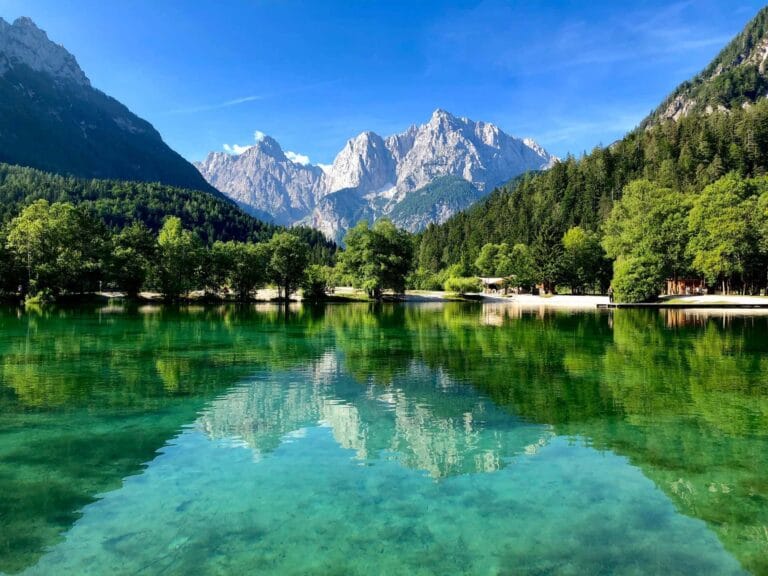 Slovenian Lakes · 1 Sep 2026Lake Jasna: The Photo-Stop Lake Below the Vršič PassTwo small artificial lakes at the foot of the Vršič Pass near Kranjska Gora, with turquoise water, the…
 Slovenian Cities · 28 Aug 2026Bled Travel Guide: The Island, the Castle and What It CostsSlovenia's most photographed lake: what it actually costs, when to come, and what is worth doing rather than…
Newsletter
Don't miss anything new
One new Slovenia guide in your inbox every couple of weeks. No spam, unsubscribe any time.