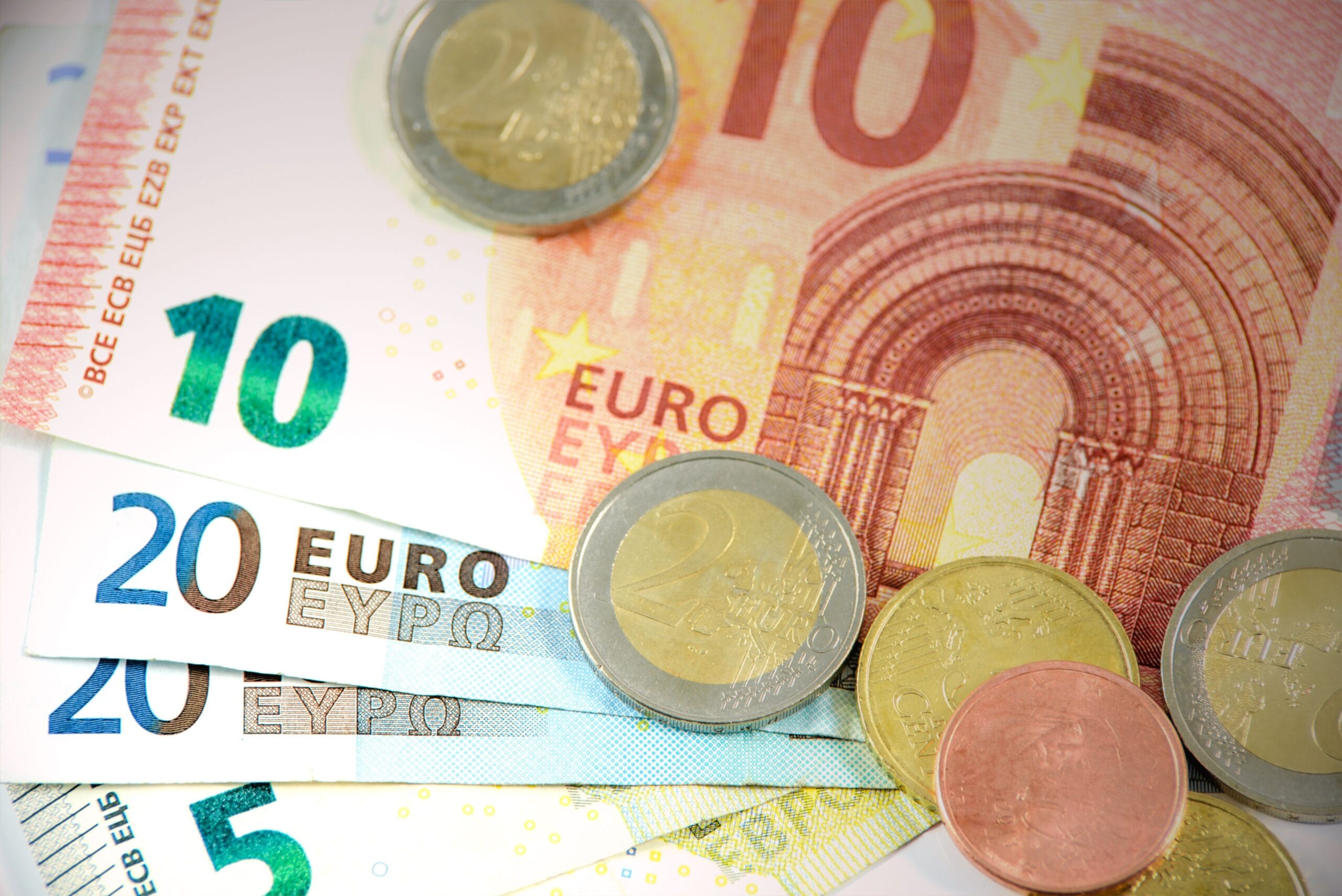
No, you don’t need to travel with a wallet full of euros. Cards and contactless work almost everywhere in cities — hotels, restaurants, supermarkets, fuel stations. But a modest amount of cash still earns its place in your pocket, because a handful of very normal situations in Slovenia — markets, mountain huts, small family-run places, some parking meters — either prefer it or require it outright.
Here’s a practical breakdown of where cards work, where they don’t, and how much cash actually makes sense to carry. This guide is part of our Slovenia Travel Tips series, covering the unglamorous logistics that don’t fit into a single destination guide.
Credit and Debit Cards — How Widely Accepted?
Slovenia has used the euro since 2007, and card payment is the default in anything tourist-facing. Visa and Mastercard (debit or credit) are accepted in hotels, mid-to-high-end restaurants, supermarkets, fuel stations, car rentals and pretty much every online booking. American Express is far less common — don’t rely on it outside major hotels and chains.
Where it gets patchier is anything smaller or more rural: family-run gostilne, countryside guesthouses, roadside stands, and village shops can be card-friendly one day and cash-only the next, often depending on whether their card terminal or the mobile signal it needs is actually working.
Contactless and Tap-to-Pay
Contactless (tap-to-pay) is standard on Slovenian terminals, including Apple Pay and Google Pay. Since terminals were upgraded from 2022 onward, most now allow a single contactless tap up to €50 without a PIN; an older or unupgraded terminal may still cap that at €25, and any amount above the limit will simply ask you to insert your card and enter a PIN, the same as anywhere else in Europe.
ATMs (Bankomati) — Where to Withdraw and What It Costs
ATMs are easy to find in Ljubljana, Maribor and every other town of any size — at bank branches, shopping centres and supermarkets. They get noticeably sparser the further you get from a town, so it’s worth stocking up on cash before heading into the mountains or countryside rather than counting on finding a machine there.
Stick to ATMs branded by an actual Slovenian bank (NLB, SKB, Nova KBM and similar) rather than the standalone, often brightly branded machines you sometimes see in tourist areas — those tend to carry noticeably worse exchange rates and higher fees. Whether your home bank charges you for a foreign withdrawal depends entirely on your own card and bank, so it’s worth checking that before you travel rather than finding out at the machine.
Always choose to be charged in euros, never your home currency
At some point during a withdrawal or card payment, you may be asked whether you’d like to be charged in euros or in your home currency. That second option is dynamic currency conversion (DCC), and the exchange rate behind it is set by the machine’s operator, not your bank — it’s reliably worse than what your own bank would give you. Choosing euros lets your home bank apply its own rate, which is almost always the better deal.
Cash-Only Situations You’ll Actually Run Into
None of these are exotic — they’re the kind of small, everyday moments a first-time visitor doesn’t always plan for.
Mountain Huts — Why You Need Cash in the Alps
If your trip includes any hiking in the Julian Alps or Kamnik–Savinja Alps, this is the one to plan around. Planinske koče (mountain huts) run by the Slovenian Alpine Association sit in places with patchy or non-existent phone signal, which means card terminals — when a hut even has one — can’t always get online to process a payment. The safe assumption is that any hut you stop at for a meal, a drink or a bed for the night wants cash, in euros, in a reasonable range of denominations (huts often can’t break a large note).
The one exception is booking ahead: reserving a bunk through the Alpine Association’s online system does require a card to secure the reservation, but that only covers the booking itself — food, drinks and any extras at the hut are still typically settled in cash on arrival. Routes like Ratitovec, home to a hut well known locally for its flancati, or the huts along the way to Triglav are exactly the kind of stop where this matters — see our full Slovenian Mountains guides for what to expect on each route.
Parking — Machines, Apps and Coins
City parking is a genuine mix, and the mix varies by town. In Ljubljana, street-parking machines take coins, the local Urbana card and the Valú system, but not every machine accepts banknotes or bank cards — the EasyPark app is the simplest workaround if you’d rather not deal with change. In Bled, most of the newer parking meters around the lake accept card payment and EasyPark directly, though it’s still worth carrying a couple of €1 and €2 coins as a backup in case a machine’s card reader or network connection is down.
If you’re driving further afield — mountain passes, smaller towns, informal gravel parking areas near trailheads — coins are the safer default; card readers are far less consistent outside the main tourist centres. Our full Driving in Slovenia guide covers vignettes, speed limits and parking in more depth if you’re renting a car for the trip.
Small Businesses and Local Shops
Independent shops, kiosks, ice-cream stands and small cafés generally accept cards these days, but it’s still common enough to hit a card reader that’s “not working today,” a spotty connection in a smaller town, or an owner who simply prefers cash for a small purchase. None of this is unfriendly or unusual — it’s just worth not assuming a card will always work the way it does in a supermarket or hotel.
Tipping: Cash or Card?
Tipping in Slovenia is a related but separate question — it’s optional almost everywhere, and rounding up the bill covers most situations. If you’re paying by card, you may also notice the terminal itself prompting for a tip percentage; that’s a feature of the payment software, not a local custom. For the full picture on what’s actually normal in restaurants, cafés, taxis and on tours, see our dedicated guide to tipping in Slovenia.
ATM Withdrawal or Currency Exchange Office?
ATM (Bankomat)
The straightforward default- Widely available in every town, open 24/7.
- Exchange rate is set by your own bank, as long as you decline dynamic currency conversion.
- May carry a withdrawal fee, depending on your card and bank.
Currency Exchange Office (Menjalnica)
Useful for exchanging leftover foreign cash- Makes sense if you’re arriving with foreign banknotes already in hand, not euros from your own account.
- Rates and commission vary noticeably between offices — it’s worth comparing before committing to one, especially near train stations and airports.
- Not generally the cheaper option for simply accessing your own money — an ATM usually is.
A quick reference for how each situation actually plays out in practice.
| Situation | What usually works |
|---|---|
| Hotels & mid-to-high-end restaurants | Card, always |
| Supermarkets & fuel stations | Card, always |
| Small family-run gostilna | Card usually, cash safer as backup |
| Markets & roadside stands | Cash |
| Mountain huts | Cash |
| City parking meters | Coins, card or app — varies by machine |
| Local buses outside Ljubljana | Cash often needed on board |
| Tipping | Cash, by rounding up |
How Much Cash to Carry, by Trip Type
There’s no single right amount — it depends entirely on what kind of days you have planned.
City sightseeing only
Minimal cash needed — a card covers almost everything in Ljubljana, Maribor or Bled’s main strip.
Day trips to towns, lakes and markets
Carry some cash for parking, market stalls and the odd small café.
A hike that ends at a mountain hut
Bring enough cash to cover food, drinks or a bed for the night at the hut itself.
Multi-day mountain trek or rural road trip
Carry enough cash for the whole stretch — ATMs and reliable card terminals may not reappear for a day or more.
FAQ
Do I need cash in Slovenia?
Not for most of a typical trip — cards and contactless cover hotels, restaurants and supermarkets. But it’s worth carrying some cash for markets, mountain huts, small family-run places and certain parking meters.
Are credit cards widely accepted in Slovenia?
Yes, Visa and Mastercard are standard almost everywhere tourist-facing. American Express is accepted far less consistently, so don’t rely on it outside major hotels.
Can I use contactless payment in Slovenia?
Yes, contactless and mobile wallets like Apple Pay and Google Pay are standard. Most terminals allow a single tap up to €50 without a PIN; larger amounts just prompt for a PIN as normal.
Are ATMs easy to find in Slovenia?
Yes in towns and cities, but they thin out quickly in rural areas and the mountains. Withdraw what you need before heading into the countryside rather than counting on finding a machine there.
Do mountain huts in Slovenia accept card payment?
Rarely, in practice. Most huts sit in areas with unreliable phone signal, so plan to pay in cash for food, drinks and a bed for the night, even if the booking itself was made online with a card.
Should I use the ATM’s currency conversion option?
No. Always choose to be charged in euros rather than your home currency — that conversion option almost always uses a worse exchange rate than your own bank would give you.
Do I need coins for parking in Slovenia?
It helps to carry a couple of euro coins as a backup, even in cities where most meters now also take cards or an app like EasyPark — machine card readers and network connections aren’t always reliable, especially outside the main tourist centres.
More to read
Fresh from Slovenia Travel Tips
Slovenia Travel in September: Weather, Crowds, Hiking and What to Expect
A month-by-month breakdown of Slovenia in September: weather, crowds, hiking and mountain hut conditions, swimming, and the local…
Luka Dončić’s Ljubljana: A Guide to His Hometown for Lakers Fans
This isn’t a Luka Dončić biography — it’s a practical guide to visiting his hometown of Ljubljana if…
Driving in Slovenia: Vignettes, Speed Limits, Parking and Mountain Roads
Driving in Slovenia is generally straightforward for tourists once you know a handful of essentials: buy an e-vignette…
More from Slovenia Travel Tips · Slovenian Mountains · Slovenian Cities · Tips in Slovenia

Related guides
Slovenia Travel in September: Weather, Crowds, Hiking and What to ExpectA month-by-month breakdown of Slovenia in September: weather, crowds, hiking and mountain hut conditions, swimming, and the local…Luka Dončić’s Ljubljana: A Guide to His Hometown for Lakers FansThis isn’t a Luka Dončić biography — it’s a practical guide to visiting his hometown of Ljubljana if…Driving in Slovenia: Vignettes, Speed Limits, Parking and Mountain RoadsDriving in Slovenia is generally straightforward for tourists once you know a handful of essentials: buy an e-vignette…