Koper Travel Guide: Slovenia’s Historic Port City
by Darja · Published Oct 13, 2026 · 7 min read
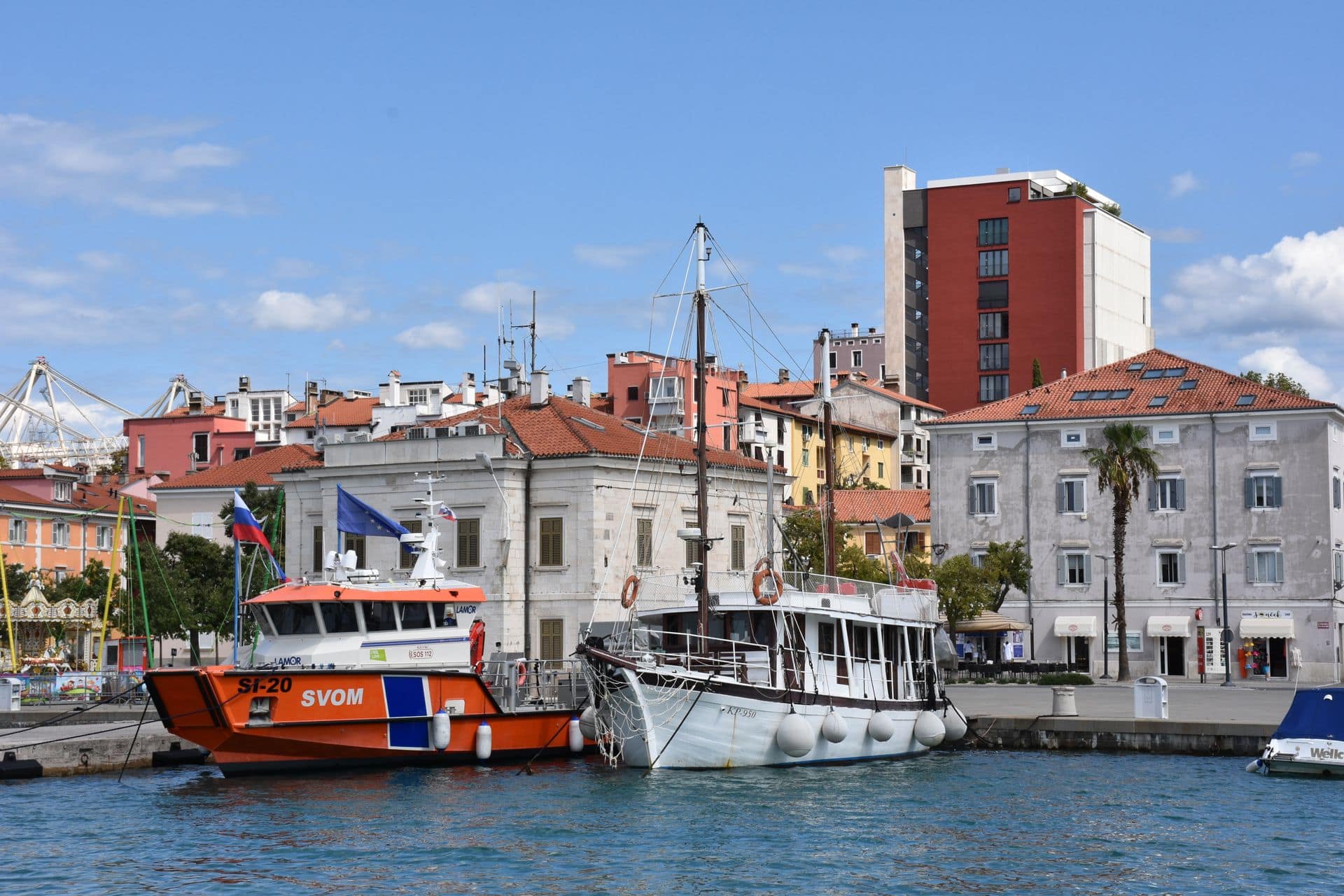
- PopulationAbout 25,750, Slovenia’s fifth-largest city
- Under Venice1278 to 1797, more than five centuries under the Republic
- Known forSlovenia’s only international cargo port, and an old town that was an island until 1825
- How many days?Half a day, easily paired with Izola or Piran
- Best months to visitMay-June and September, to avoid August
- From Ljubljana~105 km, about 1 hour by car or bus
Koper was an island until 1825, when a causeway and land reclamation joined its old town to the mainland for good. The name is still a giveaway: the Romans called the islet Insula Capris, “Goat Island,” and the Italian name Capodistria preserves a later chapter of the same history.
Koper looked toward Venice for more than five centuries, becoming the Republic’s territory in 1278 and staying that way until Venice fell in 1797. That period left the Praetorian Palace, a cathedral with one of Slovenia’s oldest bells, and a compact old town of narrow lanes and Venetian Gothic facades. What came after is just as much a part of the city: since 1957, Koper has grown into Slovenia’s only international cargo port, which gives it a working, year-round identity that the smaller resort towns along this coast don’t share.
It is one of the guides in our section on Slovenian cities, and sits on the Slovenian coast, a short drive from Izola and Piran.
A Brief History of Koper
The earliest settlement was a small island called Insula Capris by Roman settlers, later known as Aegida — Pliny the Elder mentions it by that name. In 568, refugees fleeing a Lombard invasion of nearby Tergeste (modern Trieste) settled here, and the town was renamed Justinopolis in honour of the Byzantine emperor Justinian II.
Trade with Venice is recorded from 932, and the town received its rights from Emperor Conrad II in 1035. After a period under the Patriarch of Aquileia, Koper joined the Republic of Venice in 1278 and became the capital of Venetian Istria, styled Caput Histriae in Latin — the direct source of the Italian name Capodistria. It stayed Venetian territory for more than five centuries, until the Republic itself fell in 1797. The founding of Trieste as a free port in 1719 had already chipped away at Koper’s trading advantage well before then.
After Venice, rule passed through Napoleonic France, the Austrian Empire, and Italy, before the city became part of Yugoslavia’s Zone B of the Free Territory of Trieste and then, in 1954, part of Yugoslav Slovenia outright. Many of Koper’s ethnic Italian residents left in the years around that transition; the city is still officially bilingual today, with Italian-language schools and signage alongside Slovene. The modern port was founded in 1957 and renamed Luka Koper in 1961 — it is now Slovenia’s only international cargo port and a major transit route for goods moving between the Mediterranean and landlocked Central Europe.
Top Attractions
Praetorian Palace
Koper’s city hall sits on Titov trg in a mid-15th-century Venetian Gothic palace, built in 1452–53 after two earlier municipal buildings on the same site were destroyed, in 1348 and again in 1380. It has housed the mayor’s office and municipal council since 2001, and includes a wedding hall still used for civil ceremonies.
Cathedral of the Assumption
Built in the second half of the 12th century on an older foundation, the cathedral holds one of Slovenia’s oldest bells, cast in 1333. Its side altar carries a Vittore Carpaccio painting from 1516 that spent five years off display during restoration — it returned to public view in October 2024 after conservators undid a heavy 19th-century overpainting that had covered roughly 70 percent of the original work.
Da Ponte Fountain
Built in 1666 on Prešernov trg (once called Muda Square) to supply residents with water from a nearby spring, the fountain is a bridge-shaped structure spanning an octagonal basin, ringed by fifteen pilasters carved with the coats of arms of the noble families who paid for it.
Loggia Palace
Facing the Praetorian Palace across the same square, this open Venetian Gothic loggia dates to 1462. It no longer serves its original civic function and today houses a café and a small gallery — still a good spot to sit with the two grandest buildings in town on either side of you.
Koper Hidden Gems
Muda Gate
Built in 1516, this is the last of Koper’s old city gates still standing, and the main land entrance into the old town from the north. Most visitors walk straight through it without stopping; it’s worth a second look on the way to Prešernov trg.
Socerb Castle
A clifftop fortress more than 350 metres above the Gulf of Trieste, a short drive from Koper near the Italian border, with roots going back to at least the 9th century. It burned in 1780 and sat in ruins for over a century before a Trieste baron bought and restored it in 1925 — the view from the terrace, out over the whole bay, is the real reason to go.
Day Trips
| Destination | Distance | Drive time | Best for |
|---|---|---|---|
| Izola | ~8 km | ~12 min | Fishing harbour and a quieter old town |
| Piran | ~18 km | ~20 min | Venetian old town, closed to cars |
| Portorož | ~20 km | ~25 min | Beaches, spa hotels and a promenade |
| Hrastovlje | ~20 km | ~25 min | A frescoed, fortified village church |
Piran (18 km)
Slovenia’s best-preserved Venetian old town, entirely closed to cars, is about twenty minutes down the coast. Read the full Piran travel guide before you go — the two towns are different enough that pairing them in one trip makes sense rather than feeling repetitive.
Hrastovlje (20 km)
Inland from the coast, the small Holy Trinity Church at Hrastovlje is ringed by an 8-metre-thick defensive wall built against Ottoman raids, and its interior is covered in Gothic frescoes finished in 1490 by Johannes de Castua — including a famous “Dance of Death,” rediscovered under layers of plaster only in 1949. The Slovenian government declared the church a monument of national importance in January 2026, its highest level of protection, after the Koper municipality proposed it the previous November.
Getting Around
Koper is the only town on this stretch of coast with its own train station, but the train isn’t the fastest option — the line from Ljubljana takes around 2 hours 40 minutes, against roughly an hour and a half by bus or about an hour by car. Take it for the ride if you have time to spare, not if you’re in a hurry.
The old town itself is compact and built for walking, not driving — narrow one-way streets make it impractical to drive in regardless. Park at the edge, around Dolinska cesta or the Pristan area, and walk the rest. The working port and cruise terminal sit apart from the pedestrian centre, so the city doesn’t feel as industrial on foot as the facts about it suggest.
Buses connect Koper with Izola, Piran and Portorož along the coast, and with Ljubljana and the rest of Slovenia inland.
Koper Travel Guide – Tips
Don’t expect Piran’s polish. Koper is a working port city first and a tourist town second — the old town is genuinely worth an hour or two on foot, but it won’t fill a full day on its own the way Piran can.
Combine it with Izola or Piran. Both are under twenty minutes away, and most visitors see Koper as a stop on a longer coastal day rather than a standalone destination.
Ride the train once, just for it. It’s slower than the bus, but the line runs through the Karst and gives a different view of the approach to the coast than the highway does.
More Ways to Experience Koper
Partner content — the widget below is provided by Viator, one of our booking partners. Browsing or booking through it supports Tips in Slovenia at no extra cost to you.
FAQ
Is Koper worth visiting?
Yes, especially paired with Izola or Piran. Koper has real Venetian Gothic architecture, a working port most coastal towns don’t have, and none of the summer crowding that builds up in Piran — but it is a smaller, more workaday stop on its own.
Is Koper or Piran better?
Different towns for different trips. Piran is the more complete postcard — a car-free Venetian old town on its own peninsula. Koper is a real working city with its own port, train station and university, and its old town is smaller and quicker to see. Many visitors do both in the same day.
How many days do you need in Koper?
Half a day covers the old town comfortably — the Praetorian Palace, the cathedral and the two main squares are all within a few minutes’ walk of each other. Most people pair it with Izola or Piran rather than giving it a full day alone.
Was Koper really an island?
Yes. The old town sat on a small island, first settled in Roman times, until a causeway and land reclamation works connected it to the mainland in 1825. The name of the surrounding district, and the Italian name Capodistria, both trace back to that island history.
How do I get from Ljubljana to Koper?
About 105 km. By car it’s roughly an hour on the highway; by bus around an hour and a half; by train about 2 hours 40 minutes on the slower inland line via the Karst.
Read the guide to Piran, the Venetian old town up the coast, or Izola, the quieter fishing town next door, and Portorož, the beach and spa resort further along. More on Slovenia’s cities: read the guides to Ljubljana, Maribor, Celje and Ptuj, see the whole Slovenian coast, or start planning the wider trip at Tips in Slovenia.

Darja
Writes destination guides for Tips in Slovenia, covering the country's cities, hidden gems and day trips.
Related guides
 Slovenian Cities · 16 Oct 2026Kranjska Gora Travel Guide: Skiing, Hiking and the Vršič PassKranjska Gora is Slovenia's ski town and alpine hiking base: the Vitranc World Cup course, Planica's ski flying…
 Slovenia Travel Tips · 12 Oct 2026Christmas and New Year in Ljubljana: What to KnowWhen Ljubljana's lights go on, what closes for Christmas and New Year, and what the weather is really…
 Slovenia Travel Tips · 23 Sep 2026Where Is Ljubljana, Slovenia? Location, Map & How to Get ThereA quick orientation guide to where Ljubljana actually is: coordinates, distance from Vienna, Venice, Zagreb and Munich, how…
Newsletter
Don't miss anything new
One new Slovenia guide in your inbox every couple of weeks. No spam, unsubscribe any time.