Goriška Brda: Slovenia’s Orange Wine Country, Explained
by Peter · Published Aug 19, 2026 · Updated Aug 20, 2026 · 4 min read
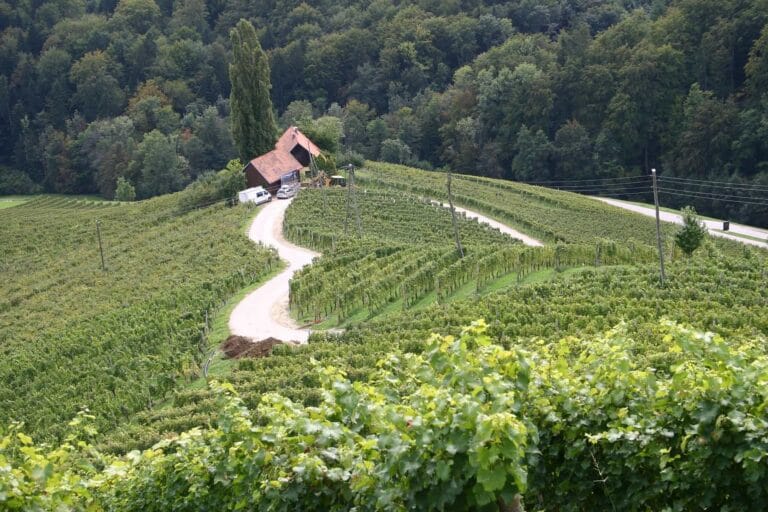
Quick answer: Goriška Brda is a cluster of terraced hills in Slovenia’s far west, on the Italian border. Around 1,800 hectares of vineyards make it the best known of the four wine districts in Slovenia’s Primorska region, built on the white Rebula grape and on the skin-contact orange wines that made Brda’s name internationally.
The border with Italy’s Collio runs straight through it, sometimes literally through a vineyard, and the two sides share soil, climate and grape varieties far more than they share a customs post. What is distinct on the Slovenian side is a stronger commitment to traditional skin-contact winemaking.
Immediately south lies the Vipava Valley, the larger of the two districts and the one that kept Slovenia’s rarest white grapes alive — worth pairing with Brda on the same trip. It is one of the districts covered in our guide to Slovenian wine, and the one most visitors reach first. Roughly 140 growers work here, producing about 70 per cent white wine and 30 per cent red, much of it organic and hand-harvested.
Below is what actually grows here, who is making it, and what else fills a day between tastings.
- LocationFar western Slovenia, on the Italian border
- Nearest townNova Gorica, about 20 minutes by car
- Signature grapeRebula (Ribolla Gialla)
- Wine styleOrange, white and red blends
- Best time to visitSept-Oct for harvest, June for cherries
- From Ljubljana~110 km, about 1 hr 20 min by car
Wines of Goriška Brda
| Wine | Grape | Style | Character | Best paired with |
|---|---|---|---|---|
| Rebula (fresh) | Rebula | Dry white | Crisp, citrus, mineral | Adriatic seafood, soft cheese |
| Rebula (orange) | Rebula | Skin-contact / amber | Tannic, dried fruit, nutty | Cured meats, aged cheese |
| Chardonnay | Chardonnay | Barrel-aged white | Rounder, buttery, oak notes | Roast poultry, creamy pasta |
| Merlot | Merlot | Medium-bodied red | Soft tannins, red berry | Grilled meats, gostilna fare |
| Cabernet Sauvignon | Cabernet Sauvignon | Full-bodied red | Firm tannins, dark fruit | Game, aged hard cheese |
| Pikolit | Pikolit | Sweet dessert wine | Honeyed, high acidity | Cherry desserts, blue cheese |
Rebula accounts for roughly a quarter of everything produced here and is the grape to taste first. Ask for both versions side by side — the fresh and the skin-contact come from the same fruit and taste almost nothing alike, which tells you more about winemaking in Brda than any tour will.
Who’s making it
Notable winemakers in Brda
These are three starting points, not a ranking. Around 140 growers work the hills, and the tasting rooms that most visitors remember are usually the small ones they found by turning off the main road.
Kozana’s hilltop tasting rooms
A cluster of small producers pouring from terraces that look straight into Italy’s Collio — the easiest place in Brda to compare several wineries in one afternoon without much driving.
What Else Is in Goriška Brda
Cherry and olive orchards
Brda is Slovenia’s main cherry-growing region, with a Cherry Festival each June that is the biggest event of the year. Peaches actually make up the larger share of the harvest, and the warm microclimate supports a small but growing olive oil industry alongside the vines.
Šmartno’s walled village
A small fortified hilltop village ringed by medieval walls, now home to a handful of wine bars and guesthouses inside the old ramparts. Its Baroque church is dedicated to St Martin, the protector of winemakers — not a coincidence anywhere in Brda.
Dobrovo Castle and the Gonjače tower
Dobrovo has a white four-towered Renaissance castle from the 17th century and the regional tourist office inside it. Ten minutes away, the Gonjače lookout climbs 23 metres and 144 steps to vineyards in every direction.
Frequently Asked Questions
What wine is Goriska Brda known for?
Rebula, known in Italy as Ribolla Gialla. It makes up around a quarter of the region’s production and appears both as a fresh dry white and as a skin-contact orange wine, which is what Brda is best known for internationally.
Do I need to book wine tastings in Brda ahead of time?
For the smaller producers, yes. Most are working farms rather than visitor centres, and a few days’ notice by email or phone is normal. Larger cellars and the tasting rooms in Smartno are more flexible.
How far is Goriska Brda from Ljubljana?
About 110 km, roughly an hour and twenty minutes by car. Public transport is limited, so a car or a guided tour from Ljubljana is the practical option.
Can I cross into Italy from Brda for the day?
Yes. Both countries are in the Schengen area and the border runs through the hills, so crossing into the Collio wine district takes minutes. Some of the best tastings on either side are a short drive apart.
When is the best time to visit Goriska Brda?
September and October for the harvest and the fullest cellars, or June for the Cherry Festival and the open cellar days. Winter is quiet and many small producers close to visitors.
More on drinking your way around the country: read about the Vipava Valley next door, browse every guide in Slovenian wine, read about prekmurska gibanica for what to eat alongside it, or start planning the wider trip at Tips in Slovenia.

Peter
Writes destination guides for Tips in Slovenia, covering the country's cities, hidden gems and day trips.
Related guides
 Slovenian Wine · 9 Sep 2026Štajerska Slovenija: Slovenia’s Aromatic White Wine Country, ExplainedSlovenia's largest wine district: aromatic whites built on Šipon (Furmint), and home to the oldest living grapevine in…Slovenian Wine · 19 Aug 2026Vipava Valley: Slovenia’s Home of Zelen and PinelaTwo grapes that grow almost nowhere else, a wind that shapes the vineyards, and Slovenia's densest natural wine…
Newsletter
Don't miss anything new
One new Slovenia guide in your inbox every couple of weeks. No spam, unsubscribe any time.