Vipava Valley: Slovenia’s Home of Zelen and Pinela
by Peter · Published Aug 19, 2026 · Updated Sep 9, 2026 · 4 min read
Quick answer: The Vipava Valley is the largest of the four wine districts in Slovenia’s Primorska region, running east to west between two limestone plateaux. It is known for two white grapes, Zelen and Pinela, which grow in commercial quantity almost nowhere else on earth, and for the burja wind that shapes both the vineyards and the wine.
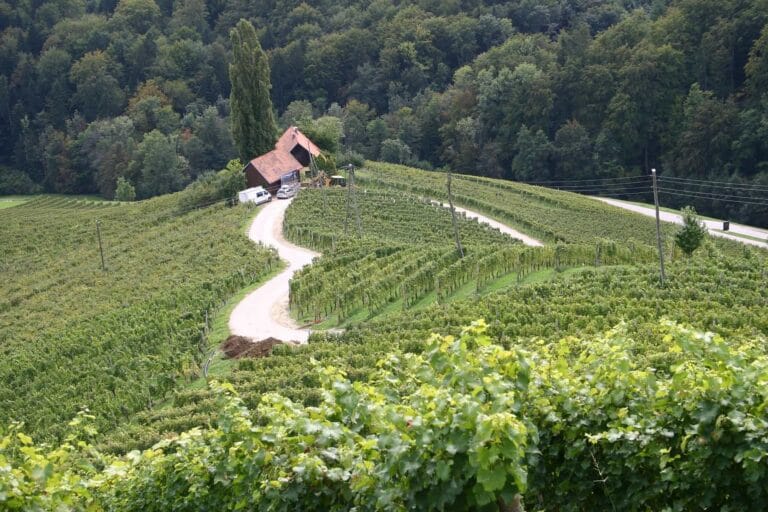
The valley sits between the Trnovo Forest plateau to the north and the Karst to the south, at 90 to 200 metres above sea level. It is warmer and drier than the Ljubljana basin, and it works as a natural corridor between the Friulian lowlands and central Slovenia.
What makes it distinct is not the international varieties, which grow well here but grow well in many places. It is the survival of a set of old local grapes that nearly disappeared in the twentieth century, and a natural-wine community that has spent two decades bringing them back.
It is one of the districts covered in our guide to Slovenian wine, and it sits directly south of Goriška Brda — close enough that many visitors do both in the same trip, different enough that they taste nothing alike.
- LocationWestern Slovenia, between the Trnovo and Karst plateaux
- Nearest townAjdovščina and Vipava, both in the valley
- Signature grapeZelen and Pinela
- Wine styleAromatic dry whites, orange wine, structured reds
- Best time to visitSept-Oct for harvest, Apr-Jun for the valley in leaf
- From Ljubljana~65 km, about 1 hr by car
Wines of the Vipava Valley
| Wine | Grape | Style | Character | Best paired with |
|---|---|---|---|---|
| Zelen | Zelen | Dry white | Herbal, pear, citrus, mineral | Asparagus, river fish, young cheese |
| Pinela | Pinela | Delicate dry white | Green apple, floral, low alcohol | Aperitif, light seafood |
| Vipavec | Zelen, Pinela, Laski Rizling | Dry white blend | Fresh, aromatic, easy | Everyday gostilna food |
| Rebula (orange) | Rebula | Skin-contact / amber | Tannic, dried fruit, savoury | Cured meats, aged cheese |
| Malvazija | Malvazija | Dry white | Rounder, stone fruit, saline | Grilled fish, prsut |
| Merlot | Merlot | Medium to full red | Soft tannins, dark berry | Roast meats, game |
Start with Zelen. It is planted on somewhere between 75 and 90 hectares worldwide, essentially all of it in this valley, and it was close to extinction before a growers’ consortium organised around it in the early 2000s. Pinela is rarer still, at roughly 50 hectares, and thin-skinned enough that it only ripens reliably in the upper valley where the wind dries the berries.
Who’s making it
Notable winemakers in the Vipava Valley
These are three starting points, not a ranking. The valley has an unusually dense natural-wine scene for its size, and most of it operates on a scale where the person pouring is the person who made it.
The old Vipava method
In 1844 the priest Matija Vertovec described a week of skin contact for white grapes as standard practice here — orange wine, documented in Slovene, long before it had a name.
Want to taste it yourself?
A guided Vipava Valley wine tasting, bookable through our partner Viator, departing from Ljubljana. Booking through this link supports Tips in Slovenia at no extra cost to you.
What Else Is in the Vipava Valley
The burja wind
The valley’s defining weather. Gusts regularly pass 100 km/h and the wind dries the grapes, keeping rot low enough that organic farming is unusually practical here. It also closes roads in winter and is the reason houses face the way they do.
Vipava and Ajdovščina
Two small towns on the valley floor, both walkable in an afternoon. Vipava sits at the springs where the river surfaces in several branches at once; Ajdovščina keeps the walls of a late-Roman fort inside its old centre.
Paragliding off Nanos
The plateau above the valley is one of Slovenia’s best-known launch sites, and the same wind that shapes the vineyards is what gets people airborne. Tandem flights run from spring to autumn.
Frequently Asked Questions
What wine is the Vipava Valley known for?
Zelen and Pinela, two indigenous white grapes grown in commercial quantity almost nowhere else. The valley also makes orange wine from Rebula and structured reds from Merlot.
Do I need to book wine tastings in the Vipava Valley ahead of time?
Yes for the small producers, which is most of them. A few days’ notice by email or phone is normal, and it is often the winemaker who answers.
How far is the Vipava Valley from Ljubljana?
About 65 km, roughly an hour by car. It is the closest of Slovenia’s Primorska wine districts to the capital, which makes it feasible as a day trip.
When is the best time to visit the Vipava Valley?
September and October for the harvest, or April to June when the valley is green and the weather is settled. The burja is strongest in winter.
What is the burja wind?
A cold north-easterly that funnels down from the Karst plateau into the valley, regularly gusting over 100 km/h. It dries the grapes and suppresses fungal disease, which is one reason organic and natural winemaking took hold here.
More on drinking your way around the country: compare it with Goriška Brda next door, head north for the aromatic whites of Štajerska Slovenija, browse every guide in Slovenian wine, or start planning the wider trip at Tips in Slovenia.

Peter
Writes destination guides for Tips in Slovenia, covering the country's cities, hidden gems and day trips.
Related guides
 Slovenian Wine · 9 Sep 2026Štajerska Slovenija: Slovenia’s Aromatic White Wine Country, ExplainedSlovenia's largest wine district: aromatic whites built on Šipon (Furmint), and home to the oldest living grapevine in…Slovenian Wine · 19 Aug 2026Goriška Brda: Slovenia’s Orange Wine Country, ExplainedRolling wine hills on the Italian border, and the source of Slovenia's best-known orange wine.
Newsletter
Don't miss anything new
One new Slovenia guide in your inbox every couple of weeks. No spam, unsubscribe any time.