Štajerska Slovenija: Slovenia’s Aromatic White Wine Country, Explained
by Peter · Published Sep 9, 2026 · 5 min read
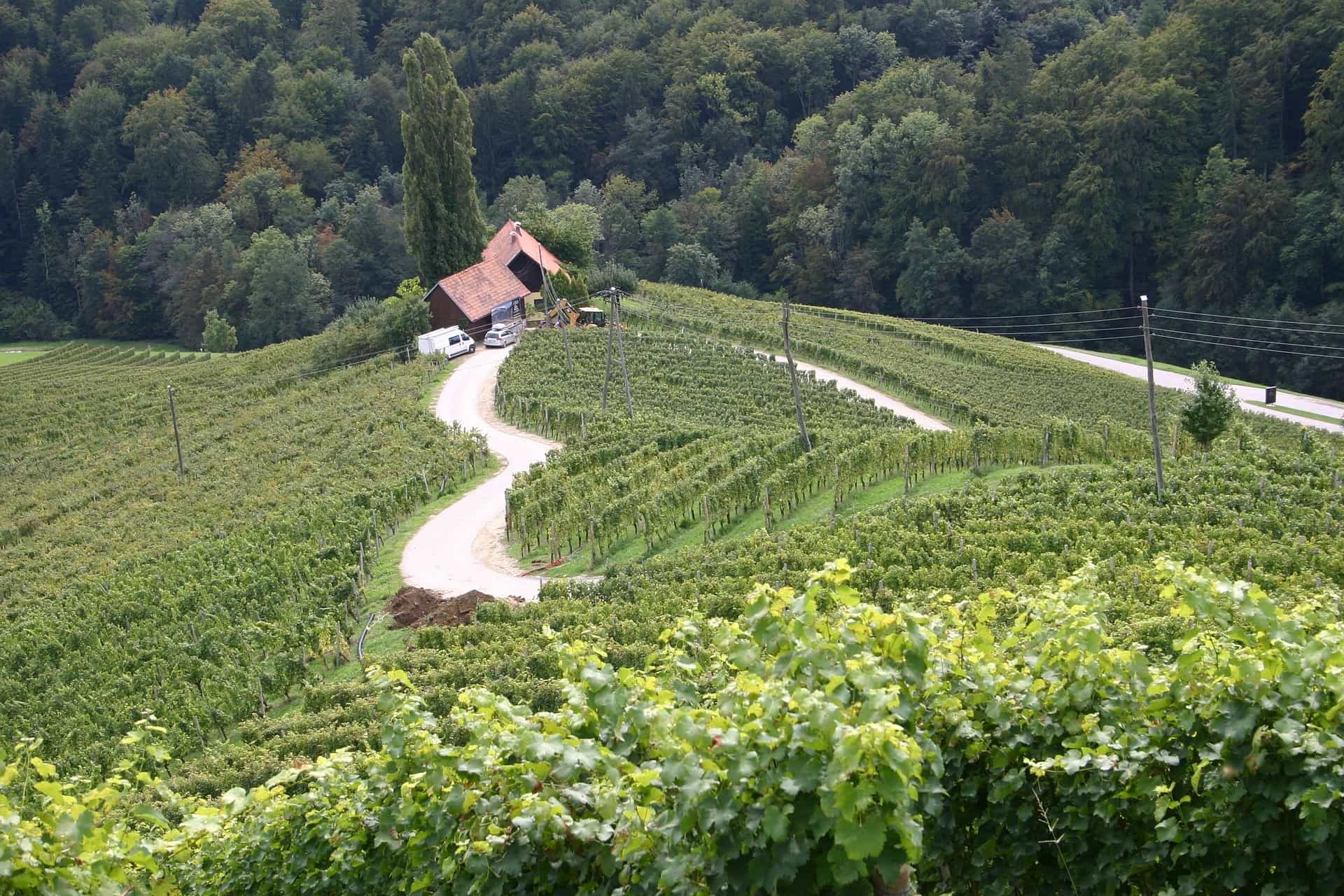
Quick answer: Štajerska Slovenija is Slovenia’s largest wine district, filling the hills of the northeast between Maribor and the Hungarian border. It is aromatic white wine country, built on Šipon (Furmint) and Laški Rizling, and it is home to Maribor’s Stara Trta — the oldest living grapevine still producing wine anywhere in the world.
The district covers the hilly northeastern corner of Slovenia, in the Podravje wine region between the Drava and Mura rivers, with Austria a short drive north and Hungary close to the east. Vineyards climb the slopes in narrow rows up to around 600 metres, cooler and windier than anything in Slovenia’s south.
What makes it distinct is climate rather than a single grape: a continental winter, a short warm summer, and enough diurnal temperature swing in autumn to keep acidity high in the whites. That is why the district makes almost nothing but crisp, aromatic white wine, and why Šipon — the same grape behind Hungary’s Tokaji, grown here dry rather than sweet — is the bottle worth ordering by name.
It is one of the districts covered in our guide to Slovenian wine, and it behaves least like the others: swap the warm, orange-wine hills of the Vipava Valley for cool nights, racy acidity and glasses that are almost always white.
- LocationNortheastern Slovenia, bordering Austria and Hungary
- Nearest townMaribor, the district’s hub
- Signature grapeŠipon (Furmint)
- Wine styleAromatic, high-acid dry whites
- Best time to visitSept-Oct for harvest, spring for the hills in blossom
- From Ljubljana~130 km, about 1 hr 20 min by car
Wines of Štajerska Slovenija
| Wine | Grape | Style | Character | Best paired with |
|---|---|---|---|---|
| Šipon | Furmint | Dry white | Crisp, green apple, high acid | Freshwater fish, young cheese |
| Laški Rizling | Welschriesling | Light dry white | Floral, apple, easy-drinking | Aperitif, light salads |
| Renski Rizling | Riesling | Dry aromatic white | Citrus, mineral, racy acidity | Grilled river fish |
| Sauvignon Blanc | Sauvignon Blanc | Dry white | Gooseberry, herbaceous, elderflower | Goat cheese, green vegetables |
| Traminec | Gewürztraminer | Aromatic white | Lychee, rose petal, spice | Soft cheese, fruit tart |
| Modra Frankinja | Blaufränkisch | Medium-bodied red | Dark berry, peppery, firm acidity | Roast pork, game |
Start with Šipon. It is the same grape as Hungary’s Furmint, the backbone of Tokaji, but almost nothing here is sweet or botrytised — Štajerska ferments it dry, which is a different drink entirely and one of the few Slovenian whites that regularly turns up on wine lists outside the country.
Who’s making it
Notable winemakers in Štajerska Slovenija
These are three starting points, not a ranking. Most cellars in Štajerska Slovenija are small family operations rather than visitor centres, and the ones people remember are usually the ones they found by calling ahead.
Stara Trta: the oldest vine still bearing fruit
On the riverside in Maribor’s old town grows a vine planted in the late 1500s — Guinness-certified as the oldest noble vine in the world still producing grapes. It yields barely 35 to 55 kg a year, bottled 2.5 dl at a time.
What Else Is in Štajerska Slovenija
Ptuj, Slovenia’s oldest town
Roman Poetovio, a castle on the hill above the Drava, and Kurentovanje, a Shrovetide carnival on UNESCO’s intangible heritage list. European Best Destinations named Ptuj its Best Cultural Heritage Town in Europe for 2026, and it sits right among the district’s vineyards.
Jeruzalem’s pilgrimage hills
A cluster of vineyard hills named, according to local tradition, after Crusaders who brought a Marian icon from Jerusalem here in the 13th century. A pilgrimage chapel built in 1652 still stands, and the hills around it are some of the most photographed vine rows in the country.
Vinag’s underground cellar
Beneath Maribor’s main square, 2.1 km of tunnels built in 1847 hold one of the largest historic wine cellars in Europe. Tours run through the barrel halls and the archive, ending, as they should, in a tasting room.
Frequently Asked Questions
What wine is Štajerska Slovenija known for?
Šipon, the local name for Furmint, made dry rather than the sweet style Hungary’s Tokaji is known for. The district also produces Laški Rizling, Renski Rizling and Sauvignon Blanc, and is Slovenia’s largest and most productive wine district.
Do I need to book wine tastings in Štajerska Slovenija ahead of time?
For the small producers, yes — most are family farms rather than visitor centres, and a few days’ notice by email or phone is normal. Larger cellars such as Ptujska Klet and the Vinag cellar in Maribor run scheduled tours and are easier to visit without planning ahead.
How far is Štajerska Slovenija from Ljubljana?
About 130 km to Maribor, roughly an hour and twenty minutes by car on the A1 motorway. It is the furthest of Slovenia’s wine districts from the capital, which makes an overnight more realistic than a rushed day trip.
When is the best time to visit Štajerska Slovenija?
September and October for the harvest and the fullest cellars, or spring when the hills are green and the roads are quiet. Winter brings Ptuj’s Kurentovanje carnival, worth combining with a cellar visit if the timing works.
What is the Stara Trta, and can I see it?
A grapevine growing on a house on Lent, Maribor’s old riverside quarter, planted in the late 1500s and Guinness-certified as the oldest noble vine in the world still producing grapes. It grows on the outside of the building, so it can be seen from the street year-round, and its small annual harvest is bottled at the Old Vine House next door.
More on drinking your way around the country: compare it with the Vipava Valley on the other side of the country, wander through Ptuj, Slovenia’s oldest town and right among these vineyards, browse every guide in Slovenian wine, or start planning the wider trip at Tips in Slovenia.

Peter
Writes destination guides for Tips in Slovenia, covering the country's cities, hidden gems and day trips.
Related guides
Newsletter
Don't miss anything new
One new Slovenia guide in your inbox every couple of weeks. No spam, unsubscribe any time.