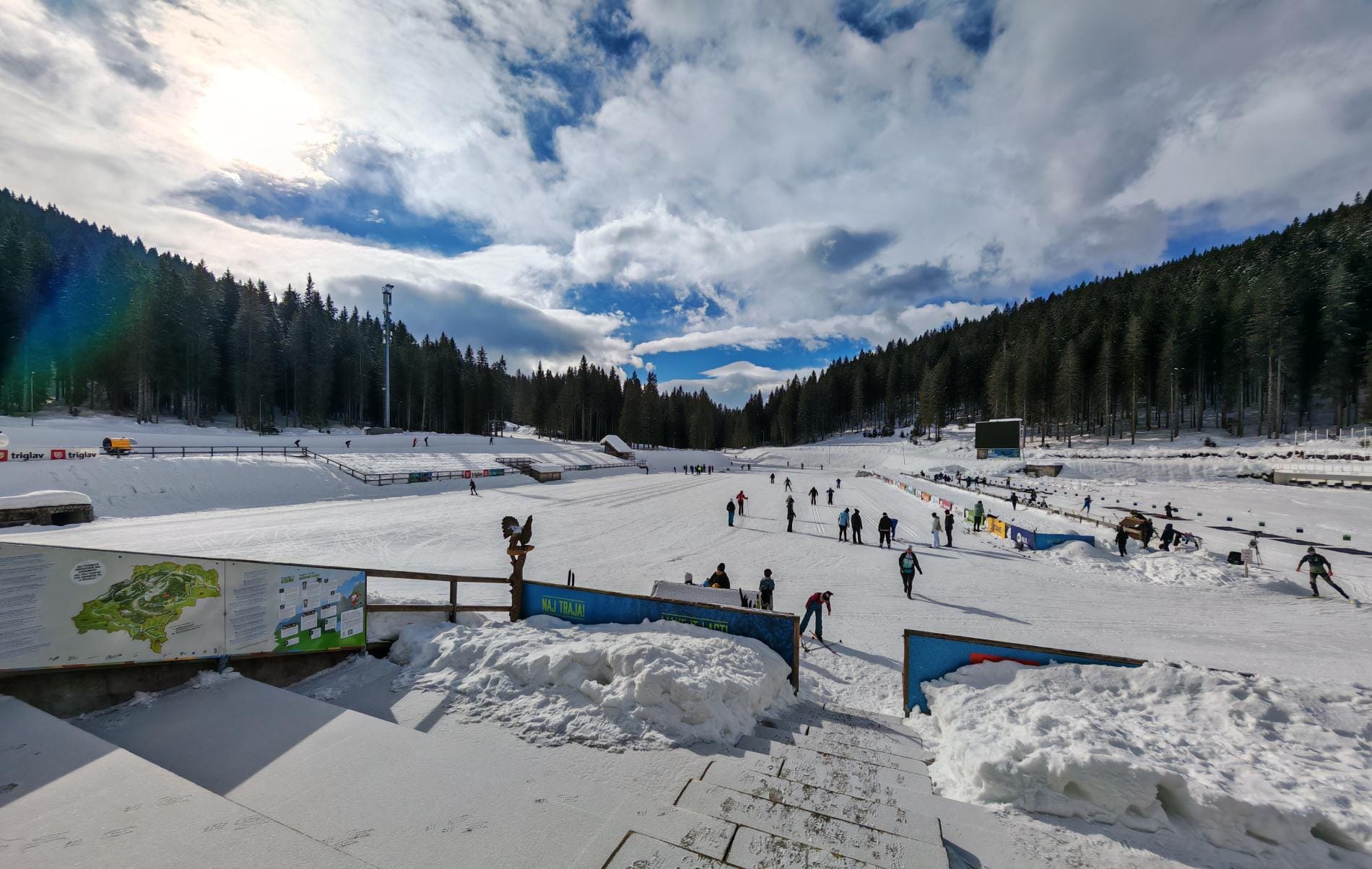
Pokljuka is a forested karst plateau in the Julian Alps, about 15 km west of Bled and part of Triglav National Park. It’s Slovenia’s main biathlon and cross-country skiing venue in winter (the Rudno Polje stadium hosts the Biathlon World Cup most seasons), and in summer the same trails open up for hiking, forest cycling and horseback riding – plus a dry glacial gorge and quiet mountain pastures most visitors never hear about.
If you’re after a single marked hike, see our guide to Viševnik, Slovenia’s easiest two-thousander, which starts right here at Rudno Polje. This article instead covers Pokljuka as a whole – the plateau, its sports infrastructure, and everything else there is to do on it, in both seasons. For other single-peak routes in the same mountain ranges, browse the full Slovenian Mountains category.
Pokljuka is unusual among Slovenia’s mountain destinations for being genuinely two-season: most of the trail network doubles as cross-country ski tracks in winter and hiking or cycling routes in summer, and the plateau’s relatively gentle terrain (1,100-1,400 m, well below the surrounding peaks) means almost none of it requires technical skill. For a harder winter target nearby, see Skiing in Slovenia; for rock routes in the same ranges, see Via Ferratas in Slovenia.
The Biathlon Centre at Rudno Polje
Rudno Polje, on the eastern edge of the plateau, is home to the Pokljuka Biathlon Centre (also called the Triglav Pokljuka Sports Centre) – one of the regular stops on the Biathlon World Cup calendar and a repeat host of IBU championship events. Slovenia is set to host top-level biathlon at Pokljuka several times over the next few seasons, including the IBU Open European Championships in 2027 and rounds of the IBU Para Biathlon World Championships calendar. For the 2026/27 World Cup season, Pokljuka’s leg is scheduled for 31 December 2026 to 3 January 2027 – check the official IBU venue page before planning a trip around it, since biathlon calendars do shift.
Outside competition weeks, the same stadium anchors Pokljuka’s cross-country skiing network: more than 30 km of groomed tracks run between Rudno Polje and Javorniška Planina, and recreational skiers can usually try biathlon-style shooting as a standalone activity. If you’re not skiing, watching a World Cup race in person is a genuinely good reason to visit in winter – just expect road closures and crowds around the stadium on competition days.
Partner content – the widget below is provided by Viator, one of our booking partners. Browsing or booking through it supports Tips in Slovenia at no extra cost to you.
Summer on the Plateau
Once the snow is gone, Pokljuka’s appeal shifts to its forest. It’s the largest unbroken block of forest in Slovenia – mostly Norway spruce, with fir, beech and larch mixed in – criss-crossed by over 80 km of forest roads and trails that make it one of the country’s better mountain-biking and gravel-cycling areas, alongside dedicated road routes up onto the plateau itself.
Beyond cycling, Pokljuka Tourism’s own activity list includes guided horseback riding between the hamlets of Uskovnica and Zajamniki, Nordic walking (poles are available to borrow locally), and a set of thematic walking trails built around the plateau’s peat bogs, its cheese-making tradition, and local archaeological sites – a gentler alternative to summiting anything.
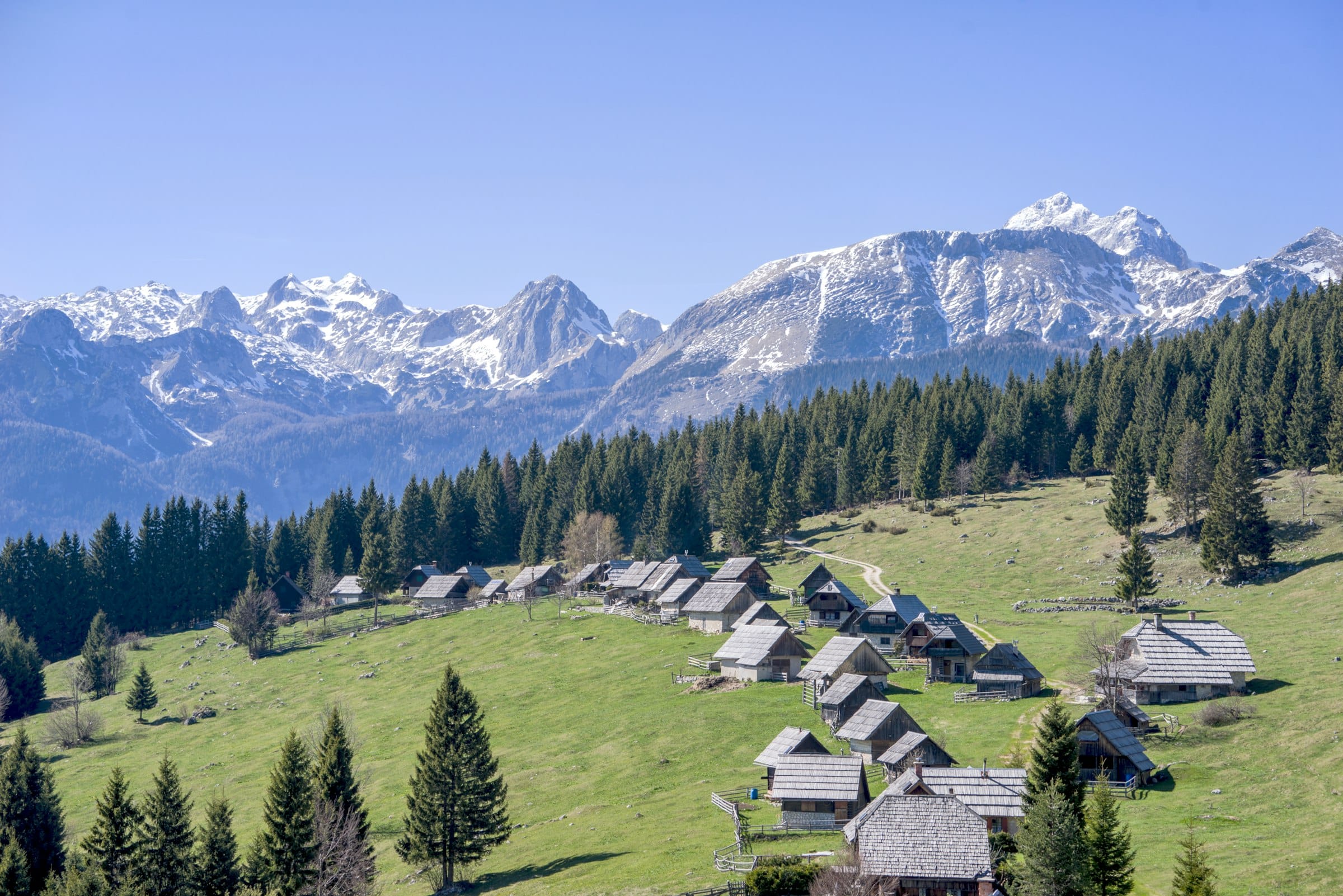
Three starting points cover most of what riders actually do here. Bled is the classic road-cycling approach: a demanding ~52 km loop climbs via Zgornje Gorje and the old Zatrnik ski area (around 850 m of total gain, with a steep 10-18% stretch) to Mrzli Studenec, then descends the Bohinj side past the Šijec bog and Gorjuše before looping back to Bled – rated a hard day out, not a casual ride. Bohinjska Bistrica, on the Bohinj side, is the start of Juliana Bike’s first stage up to Goreljek on the plateau – a gentler alternative, and summer buses from Bohinj run a trailer for bikes if you’d rather skip the climb entirely. Rudno Polje itself is the easiest base of the three: once you’re already on the plateau (by car or after either climb), the 80+ km of mostly level stone forest roads fanning out from here suit a relaxed afternoon far more than either approach road does.
Hiking Day Trips from Pokljuka
Pokljuka is also a trailhead for some of the Julian Alps’ better-known summits. Viševnik (2,050 m) starts directly from Rudno Polje and is one of the easiest two-thousanders in the country – see that guide for routes, timing and the nearest hut. Debela peč, the plateau’s own highest point at 2,014 m, is a quieter, less-visited target in the same area. Pokljuka is also one of the gentler approach routes toward Triglav itself, for hikers who want to start from relatively level ground rather than a valley floor.
At a Glance: What to Do and When
| Activity | Best season | Difficulty | Where on the plateau |
|---|---|---|---|
| Cross-country skiing | Dec-Mar | Easy to moderate, marked tracks | Rudno Polje – Javorniška Planina |
| Biathlon World Cup / try-it shooting | Dec-Jan (events) or year-round | Spectator or beginner | Rudno Polje stadium |
| Hiking to Viševnik | Jun-Oct | Easy | Rudno Polje trailhead |
| Hiking toward Triglav | Jul-Sep | Demanding | Various approach routes |
| Pokljuška soteska (gorge) walk | Year-round | Easy, family-friendly | Near Krnica |
| Forest and gravel cycling | May-Oct | Easy to moderate | 80+ km of forest roads |
| Horseback riding | May-Sep | Beginner-friendly, guided | Uskovnica – Zajamniki |
Natural Attractions: Gorge, Bog and Mountain Pastures
The Pokljuška soteska (Pokljuka Gorge), near the village of Krnica on the plateau’s southern edge, is a protected natural monument and reportedly the largest fossil gorge in Slovenia – around 2 km long and up to roughly 40 m deep in its most dramatic section. It was carved by glacial meltwater about 10,000 years ago; the water is long gone, leaving a dry limestone gorge with a 22 m waterfall, a cave tunnel known as Pokljuška luknja, and a natural rock bridge some 24 m overhead. A roughly 2 km circular trail (about an hour, rated easy) crosses the narrowest section on wooden walkways and is genuinely family-friendly, including for younger children.
Near the settlement of Goreljek, the Šijec peat bog is a much quieter spot – a small, boggy clearing in the forest with a path running alongside it. It sees far fewer visitors than the gorge or the ski trails, and detailed visitor information is thin, so treat it as a short, low-key detour rather than a planned hike with marked stages.
Scattered across the plateau are several traditional mountain pastures – Uskovnica, Zajamniki, Lipanca and Javornik – with hay meadows and wooden herders’ huts that are still used seasonally. They’re worth a stop if you want a sense of Pokljuka’s farming history alongside its sporting one.
Where to Stay
Hotel Jelka, near Podjelje on the plateau itself, is the main option if you want to actually sleep on Pokljuka rather than drive up for the day. Most visitors base themselves in Bled or Bohinj instead and treat Pokljuka as a day trip – see our guide to Where to Stay in Slovenia for how those two compare as a base.
Forest cycling, Nordic walking, horseback riding and the easier hikes (Viševnik, the Pokljuka Gorge) are all in play, with none of the crowds or road restrictions that come with a World Cup weekend. Thematic trails and the mountain pastures are also only really worth doing once the snow is gone.
Cross-country skiing on groomed tracks, a try at biathlon shooting, and – if the dates line up – a World Cup race are the draw. Expect cold, exposed conditions on the open parts of the plateau and plan around the competition calendar if you don’t want roads closed on arrival.
Getting There
Pokljuka has no train or scheduled bus service onto the plateau itself, so a car is the realistic way to get here – see our Driving in Slovenia guide for winter tyre rules and mountain-road conditions before a cold-season trip. There are two main approaches: from the Bled side via Zgornja Radovna or Mojstrana through Krnica (the route past the gorge trailhead), and from the Bohinj side via Koprivnik v Bohinju. Both involve winding mountain roads; some stretches near individual trailheads are unpaved.
Partner link — booking through this link supports Tips in Slovenia at no extra cost to you.
Compare rental car prices for Slovenia
When to Visit
June to September is the most reliable window for hiking, cycling and the thematic trails, with long daylight and the pastures in use. December through March is biathlon and cross-country season – January and February tend to hold the most consistent snow, while a World Cup weekend (such as 31 December 2026 to 3 January 2027 for the 2026/27 season) is worth building a trip around if you want to see racing, but worth avoiding if you just want quiet trails.
Before you go: Pokljuka’s weather can turn quickly even in summer, and winter conditions on the open plateau are colder and windier than in Bled or Bohinj below. Check ARSO’s mountain weather bulletin before a hike, and in winter confirm road and parking conditions near Rudno Polje during competition weeks. The emergency number 112 and Gorska reševalna zveza Slovenije (Mountain Rescue) cover the whole area.
Explore More Outdoor Experiences Near Pokljuka
Partner content – the widget below is provided by Viator, one of our booking partners. Browsing or booking through it supports Tips in Slovenia at no extra cost to you.
Frequently Asked Questions
What is Pokljuka known for?
Pokljuka is Slovenia’s main biathlon and cross-country skiing venue in winter, and a hiking, cycling and horseback-riding area in summer. It also contains the largest unbroken forest in Slovenia and a dry glacial gorge, the Pokljuška soteska.
Where is Pokljuka and how do I get there?
It’s a plateau in the Julian Alps about 15 km west of Bled, inside Triglav National Park. There’s no train or scheduled bus onto the plateau, so you’ll need a car – approach either from Bled via Krnica or from Bohinj via Koprivnik.
When is the Pokljuka Biathlon World Cup?
For the 2026/27 season, Pokljuka’s World Cup leg is scheduled for 31 December 2026 to 3 January 2027. Biathlon calendars can shift, so check the official IBU venue page before planning a trip around it.
What’s a good first hike on Pokljuka?
Viševnik, reached directly from the Rudno Polje trailhead, is one of Slovenia’s easiest two-thousanders and a good introduction to the plateau. If you’d rather not summit anything, the Pokljuška soteska circular walk is easy and family-friendly.
Is Pokljuka suitable for families with young children?
The Pokljuška soteska gorge trail is rated easy and is genuinely suitable for younger children, with a cave and wooden-bridge sections kids tend to enjoy. The higher hiking routes and ski trails are better suited to older children and adults.
Do I need a car to visit Pokljuka?
Yes. There’s no scheduled public transport onto the plateau, so a rental car or a tour from Bled or Bohinj is the only practical way to get there.
Where should I stay if I want to visit Pokljuka?
Hotel Jelka on the plateau itself is the only on-site option most visitors would recognize. Most people instead base themselves in nearby Bled or Bohinj and treat Pokljuka as a day trip.
More to read
Fresh from Slovenia Travel Tips
Thermal Spas in Slovenia: The Best Terme for a Winter Visit
Quick answer: Slovenia’s thermal spas (terme) stay open all winter, but what’s actually usable varies a lot by…
Slovenia Travel in December: Weather, Crowds, Hiking and What to Expect
December is when Slovenia goes fully festive and genuinely cold — lift-served skiing begins at the lower resorts,…
Christmas Markets in Slovenia Beyond Ljubljana: Ptuj, Kranj, Bled, Maribor and Celje
Quick answer: Ljubljana isn’t the only Slovenian city with a festive December program. Ptuj, Kranj, Bled, Maribor and…
For single-peak routes starting on this same plateau, see our guide to Viševnik. For winter sport elsewhere in Slovenia, see Skiing in Slovenia, and for rock routes in the same ranges, see Via Ferratas in Slovenia. Driving up? Check Driving in Slovenia first.

Related guides
 Viševnik: Routes, Difficulty and Slovenia’s Easiest Two-ThousanderViševnik (2,050 m) is routinely named the most-visited peak above 2,000 m in Slovenia — not because it’s…
 Skiing in Slovenia: Resorts, Piste Lengths and 2026/27 Opening DatesSlovenia’s ski season normally runs from late November to late March, spread across eleven resorts from the high…
 Via Ferratas in Slovenia: Routes, Grading and What to Know Before You GoVia ferratas are protected climbing routes — fixed cables, metal rungs and pegs bolted into the rock —…