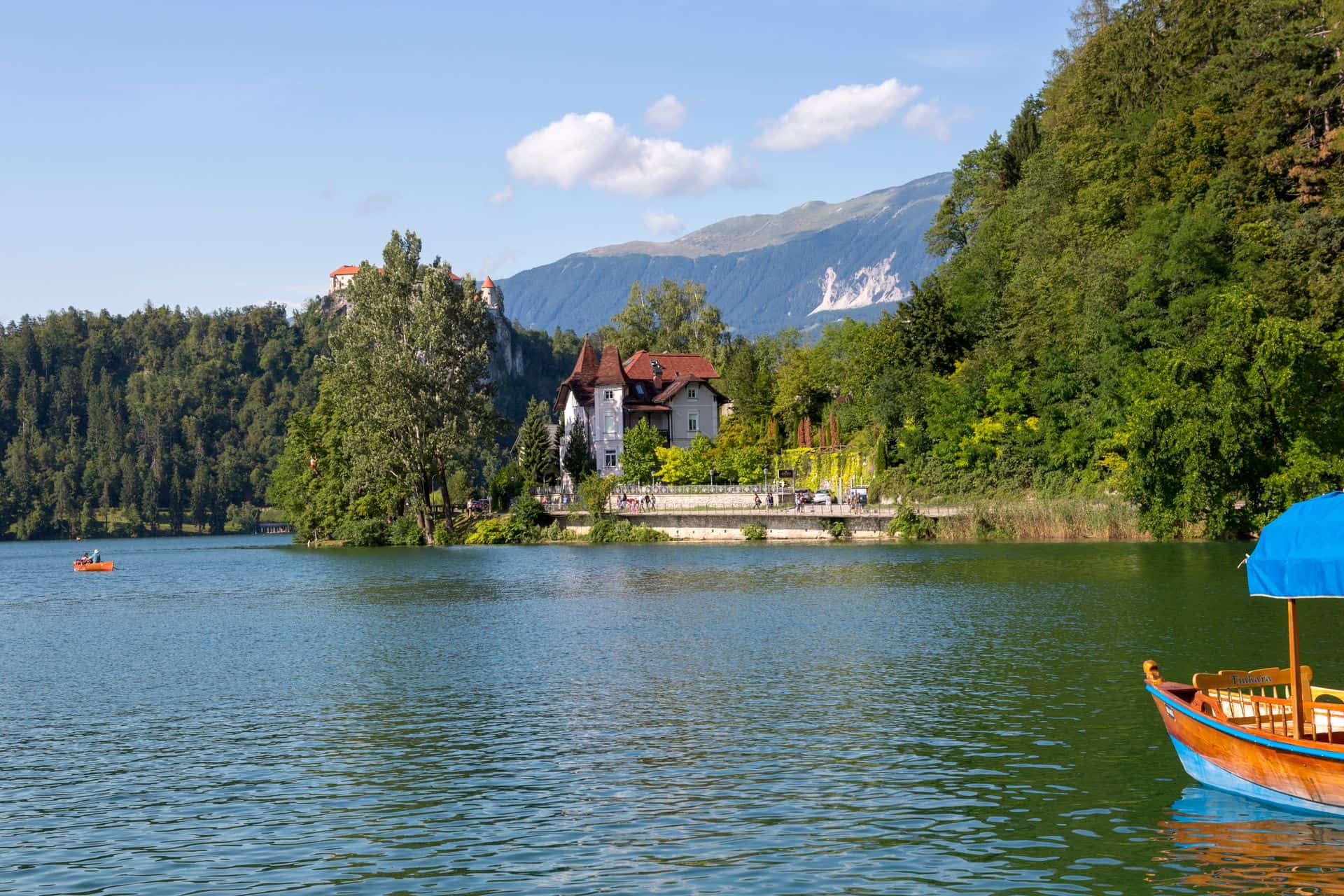
September is one of the best months to visit Slovenia — with a catch: the month itself splits in two. The first half still feels like summer (warm days, swimmable lakes, thinner crowds than August), while the second half turns noticeably cooler and wetter, and some seasonal services — mountain huts, boat hire, lakeside restaurants — start closing for the year. Plan around that split rather than treating “September” as one uniform month.
This guide is part of our Slovenia Travel Tips series, and pairs well with our 7 Days in Slovenia itinerary and our Driving in Slovenia guide if you’re still working out the logistics. Here’s what actually changes through the month — weather, crowds, hiking conditions and the local events worth knowing about — so you can plan around the right half of September for what you want to do.
What Changes in September, at a Glance
Weather
Warm and summery in the first half (low-to-mid 20s°C), cooler and more unsettled in the second (high teens, chillier evenings).
Crowds
Noticeably thinner than July–August, and thinner still once European school terms restart — usually the biggest single drop of the month.
Hiking
Many regulars call it the best hiking month — cooler air, clear light, quiet trails — but high-altitude huts start closing for the season as the month goes on.
Swimming
Lakes and the coast are still genuinely swimmable early in the month, then cool down fast as September wears on.
Soča Valley
Water levels often pick back up after summer’s low point, which can mean livelier rafting and kayaking than August offered.
Harvest & events
Grape harvest gets underway in the wine regions, and village festivals like Bohinj’s Cow Ball fall in this window.
Weather in September: Early vs. Late
September doesn’t cool off evenly — it holds onto summer for roughly the first half, then turns fairly decisively. In Ljubljana, daytime highs typically run 22–24°C through the first half of the month, dropping to around 18–20°C by the second half, with evenings cooling to 10–12°C. The coast and the lake basins follow a similar shape, just a degree or two warmer on the coast and a degree or two cooler around the Alpine lakes.
Rain is a normal part of the month rather than a late-month surprise — on average, roughly one day in three sees measurable rainfall, and that holds fairly steady across the month rather than being concentrated at either end. Pack a rain layer regardless of which half of September you’re visiting. Daylight also shortens noticeably over the month, from around 13 hours at the start down to a little under 12 hours by the end — worth factoring into how late you plan a hike or a drive.
As with any seasonal average, a specific week can run warmer, cooler or wetter than the norm — check a short-range forecast close to your travel dates rather than planning entirely off these figures.
Crowds: Before and After Mid-September
September already means noticeably fewer visitors than July or August at every major sight, but the real drop-off tends to land once European school terms restart — Slovenia’s own school year begins on 1 September, and most of the rest of the continent follows within a week or two either side of that date. Bled and Postojna Cave are the two places where this is most visible — both stay busy through the first week or so of September and then noticeably calmer from mid-month on. Piran and the coast follow the same pattern, just with a slightly longer tail since coastal weather often holds a bit later into the month.
None of this means September is ever truly empty — it’s still a popular month to visit precisely because the trade-off (warm enough, quiet enough) is so favourable — but if quiet is the priority over warmth, the back half of the month delivers noticeably more of it than the front half does.
Hiking Conditions and Mountain Huts
Plenty of regular hikers rate September as the single best month to be on Slovenia’s trails: the summer heat has broken, the air tends to be clearer, and the crowds that fill routes like Triglav in July and August thin out considerably. Lower and mid-altitude routes, including one like Ratitovec, generally stay in good walking condition right through the month.
The one thing to plan around is the huts themselves. Many high-altitude mountain huts, including those along popular Triglav routes, start winding down and closing for the season at some point in the second half of September — exact dates vary hut to hut and year to year depending on weather and staffing, so it’s worth confirming directly with the hut (or checking the Slovenian Alpine Association’s current listings) before counting on one being open, especially for a late-September trip. See our full Slovenian Mountains guides for what to expect route by route.
The real split isn’t the whole month — it’s mid-September
Most of what changes in this guide doesn’t happen gradually across 30 days — it happens somewhere around the middle of the month, once the first cold front of autumn comes through and school terms pull the last of the summer crowds home. A trip booked for the first week of September and a trip booked for the last week can look like two different seasons: one still warm, busy-ish and fully open, the other cooler, quieter and with a few doors — huts, boat hire, some lakeside restaurants — starting to close. If your dates are flexible, decide first whether you want “late summer” or “quiet early autumn,” then pick your week accordingly.
Swimming: Lakes, Rivers and the Coast
Early September is still genuinely swimmable. Lake Bled tends to sit around 20°C at the start of the month, Lake Bohinj a little cooler, and the Adriatic off Piran holds onto its summer warmth a bit longer than the Alpine lakes do. All three cool down as the month goes on, and by late September a swim is a cold-water dip rather than a lazy afternoon float — still doable for the enthusiastic, just a different experience than in August.
The Soča Valley in September
By late summer, the Soča River is often at its lowest water level of the year, which can mean a gentler, slower rafting run. September’s cooler weather and the first real autumn rain typically bring levels back up, which is good news if you want a livelier ride than the height of summer offers. It’s also simply a quieter month to be in the valley — fewer rafting groups, easier parking, and the same emerald-green water the region is known for. If your plans include the Logar Valley as well, September’s thinner crowds and still-mild daytime temperatures make it a comfortable month for the drive-in-and-walk route through the valley too.
Harvest Season and Local Events
September is when Slovenia’s wine regions get busy in a different way — grape harvest (trgatev) usually gets underway during the month in Goriška Brda and the Vipava Valley, running into October. The exact start date shifts from year to year with the vintage, so treat any specific date you read as an estimate rather than a fixed booking.
It’s also festival season in a few smaller, more local ways — Bohinj’s long-running Cow Ball (Kravji bal), celebrating the cattle being brought down from the high mountain pastures for the winter, is typically held in this window; the 2026 edition falls on 20 September. Events like this are worth checking the current year’s date for specifically, since they move around the calendar slightly year to year.
Early September or Late September?
If your travel dates are flexible, this is really the question September asks you to answer.
Early September (1st–~15th)
Best for: warmth and swimming- Still summery — warm days, swimmable lakes and coast.
- Busier, especially the first week, closer to August than October.
- Everything is still open: huts, boat hire, seasonal restaurants.
Late September (~15th–30th)
Best for: quiet and hiking- Noticeably cooler and more rain-prone; layers become essential.
- The quietest stretch of the month at major sights.
- Some huts, boats and seasonal spots start closing — check ahead.
A quick reference for the questions that come up most.
| Question | Short answer |
|---|---|
| Is September a good time to visit Slovenia? | Yes — widely considered one of the best months, especially the first half. |
| Is it warm enough to swim in September? | Early in the month, yes; it cools noticeably by the back half. |
| Will mountain huts be open? | Most are through mid-September; check ahead for late-month dates. |
| Is September crowded at Lake Bled? | Quieter than summer throughout, and noticeably quieter after mid-month. |
| Do I need a rain jacket? | Yes — rain is a normal feature of the month, not an exception. |
| Is the Soča Valley good in September? | Often better than August — cooler, quieter and usually more water in the river. |
What to Pack for September
FAQ
Is September a good month to visit Slovenia?
Yes — it’s widely considered one of the best months, combining warm early-month weather with noticeably fewer crowds than July or August. The trade-off is that the weather and crowd levels both shift meaningfully between the first and second half of the month.
What is the weather like in Slovenia in September?
Warm in the first half, with daytime highs typically in the low-to-mid 20s°C, cooling to the high teens by the second half. Rain is a normal feature throughout the month, so pack for it regardless of when you travel.
Is Lake Bled swimmable in September?
Yes, especially early in the month, when the water is still around 20°C. It cools steadily as September goes on, so a late-month swim is a much colder experience than an early-month one.
Will mountain huts be open in September?
Most are still open through the first half of the month, but many begin closing for the season as the month goes on — timing varies hut to hut. Confirm directly with the hut or check current Alpine Association listings before relying on one, especially for a late-September trip.
Is September a good month to hike in Slovenia?
Many regular hikers consider it the best month — cooler temperatures, clearer air and thinner crowds than summer. Weather at altitude is more changeable than in summer, so check conditions before a high route, particularly later in the month.
Is it too cold to visit the coast in September?
Not at all, especially early in the month — the Adriatic holds its warmth a little longer than the Alpine lakes do. It’s a comfortable month to explore Piran without August’s heat and crowds.
What should I pack for Slovenia in September?
Layers for temperature swings between morning, midday and evening, a proper rain layer, a warmer layer if you’re heading into the mountains, and swimwear if you’re travelling in the first half of the month.
More to read
Fresh from Slovenia Travel Tips
Do You Need Cash in Slovenia? Cards, ATMs and When to Carry Euros
No, you don’t need to travel with a wallet full of euros. Cards and contactless work almost everywhere…
Luka Dončić’s Ljubljana: A Guide to His Hometown for Lakers Fans
This isn’t a Luka Dončić biography — it’s a practical guide to visiting his hometown of Ljubljana if…
Driving in Slovenia: Vignettes, Speed Limits, Parking and Mountain Roads
Driving in Slovenia is generally straightforward for tourists once you know a handful of essentials: buy an e-vignette…

Related guides
Do You Need Cash in Slovenia? Cards, ATMs and When to Carry EurosNo, you don’t need to travel with a wallet full of euros. Cards and contactless work almost everywhere…Luka Dončić’s Ljubljana: A Guide to His Hometown for Lakers FansThis isn’t a Luka Dončić biography — it’s a practical guide to visiting his hometown of Ljubljana if…Driving in Slovenia: Vignettes, Speed Limits, Parking and Mountain RoadsDriving in Slovenia is generally straightforward for tourists once you know a handful of essentials: buy an e-vignette…